Grid-connected rooftop solar involves more than mounting panels and connecting an inverter. Property owners also need to understand how their solar system interacts with the electricity network and how exported and imported energy is accounted for.
For people researching Solar Net Metering Nagpur, the most important starting point is understanding the basic concept and recognising that procedures are governed by applicable regulations and electricity-distribution requirements.
What does net metering mean
A rooftop solar system often generates electricity during daylight hours. The property can use part of this generation directly.
When generation and consumption do not occur at exactly the same level, electricity may be imported from or exported to the grid depending on the system and applicable arrangement.
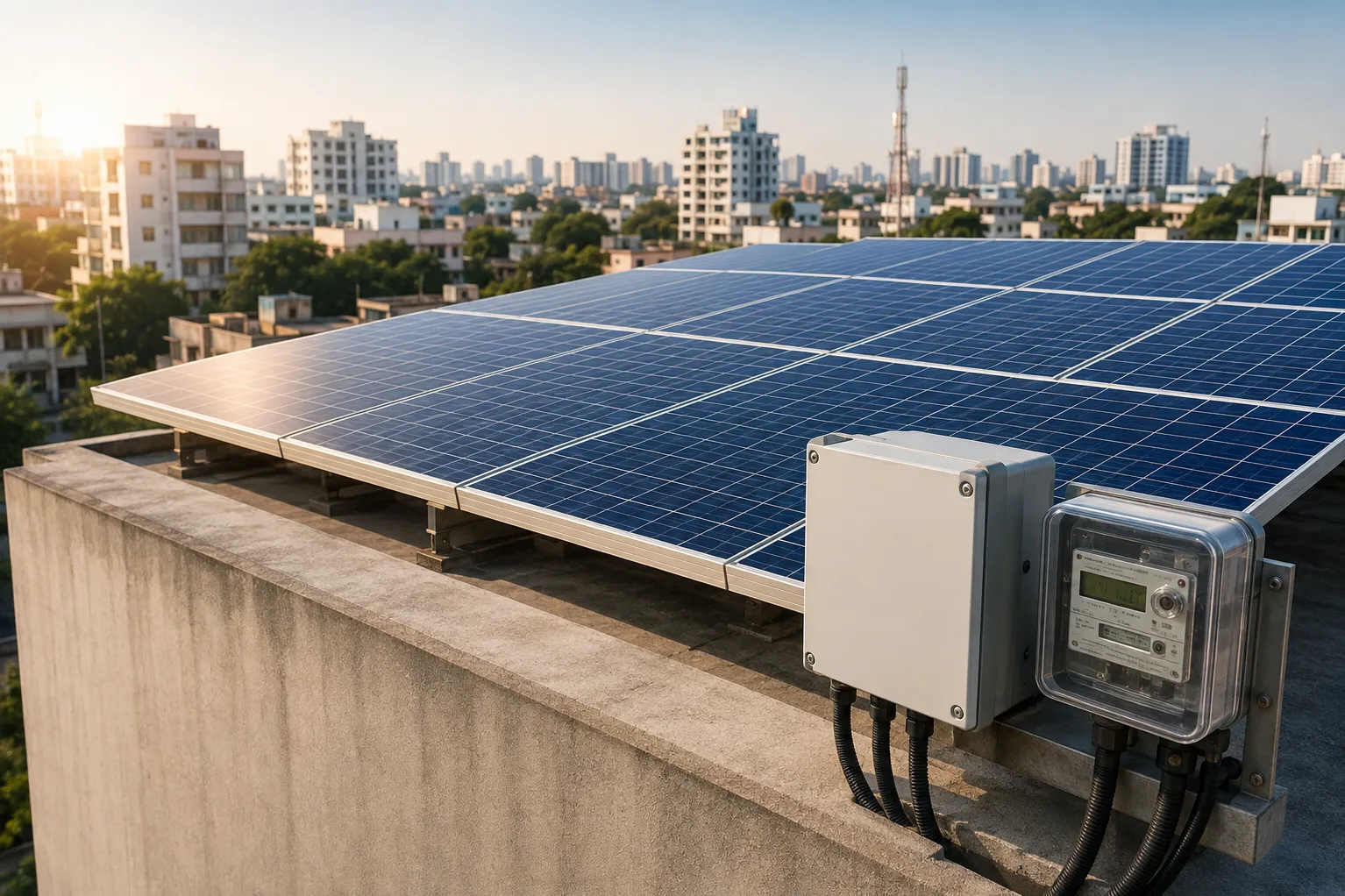
A suitable metering mechanism records these energy flows so billing can be handled according to prevailing rules.
This does not mean every unit generated automatically produces an identical financial benefit. Billing treatment depends on the regulations and tariff framework applicable to the consumer.
Why system sizing remains important
Some buyers assume net metering means they should install as much rooftop capacity as possible.
That approach can overlook actual electricity consumption, sanctioned load, available roof area, applicable capacity rules, and project economics.
A better approach is to review historical bills and develop a system around realistic consumption and regulatory conditions.
Documents and technical requirements matter
Grid-connected rooftop solar usually involves technical and administrative requirements.
Depending on the prevailing procedure, these may relate to consumer information, system capacity, equipment specifications, electrical diagrams, installation details, inspection, metering, and commissioning.
Requirements can change, so customers should work according to the current rules applicable at the time of their project.
Avoid common planning mistakes
Several issues can complicate rooftop projects:
- Selecting capacity before reviewing electricity consumption
- Ignoring sanctioned-load considerations
- Assuming approval is automatic
- Submitting inconsistent consumer information
- Installing equipment without considering applicable technical requirements
- Confusing net metering with battery backup
The final point is particularly important.
A conventional grid-connected solar system normally requires appropriate anti-islanding protection and generally does not continue supplying the property during a grid outage. Customers requiring backup should discuss hybrid or storage-based configurations separately.
Look at the complete economics
When evaluating rooftop solar, consider the electricity generated and how much can be effectively utilised under the applicable arrangement.
A commercial facility with strong daytime consumption may directly consume a large share of solar production. A residential property may have a different pattern.
These differences influence project economics even when two systems have identical capacity.
Maxvolt Solar Pvt Ltd assists customers in Nagpur with rooftop solar planning, including system design and project requirements associated with grid-connected installations. This helps ensure that technical planning is considered alongside the relevant electricity-distribution procedures.
Keep current regulations central to the decision
Solar regulations, application processes, and programme conditions can evolve. For that reason, property owners should avoid relying on outdated assumptions about eligibility, capacity limits, billing, or approval timelines.
A successful rooftop project begins with current information, accurate consumption data, suitable equipment, and a technically appropriate installation.
For homeowners, housing societies, businesses, and industries in Nagpur, understanding net metering before purchasing a solar system makes it easier to compare proposals realistically and plan a system that fits both the property and Maharashtra's applicable grid-connected solar framework.
Keywords