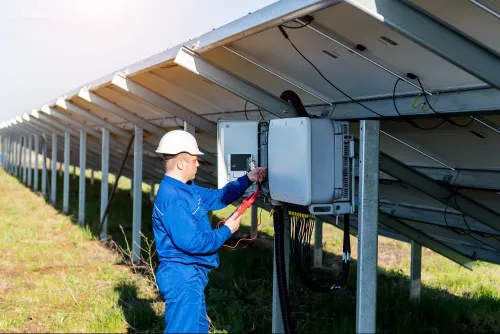
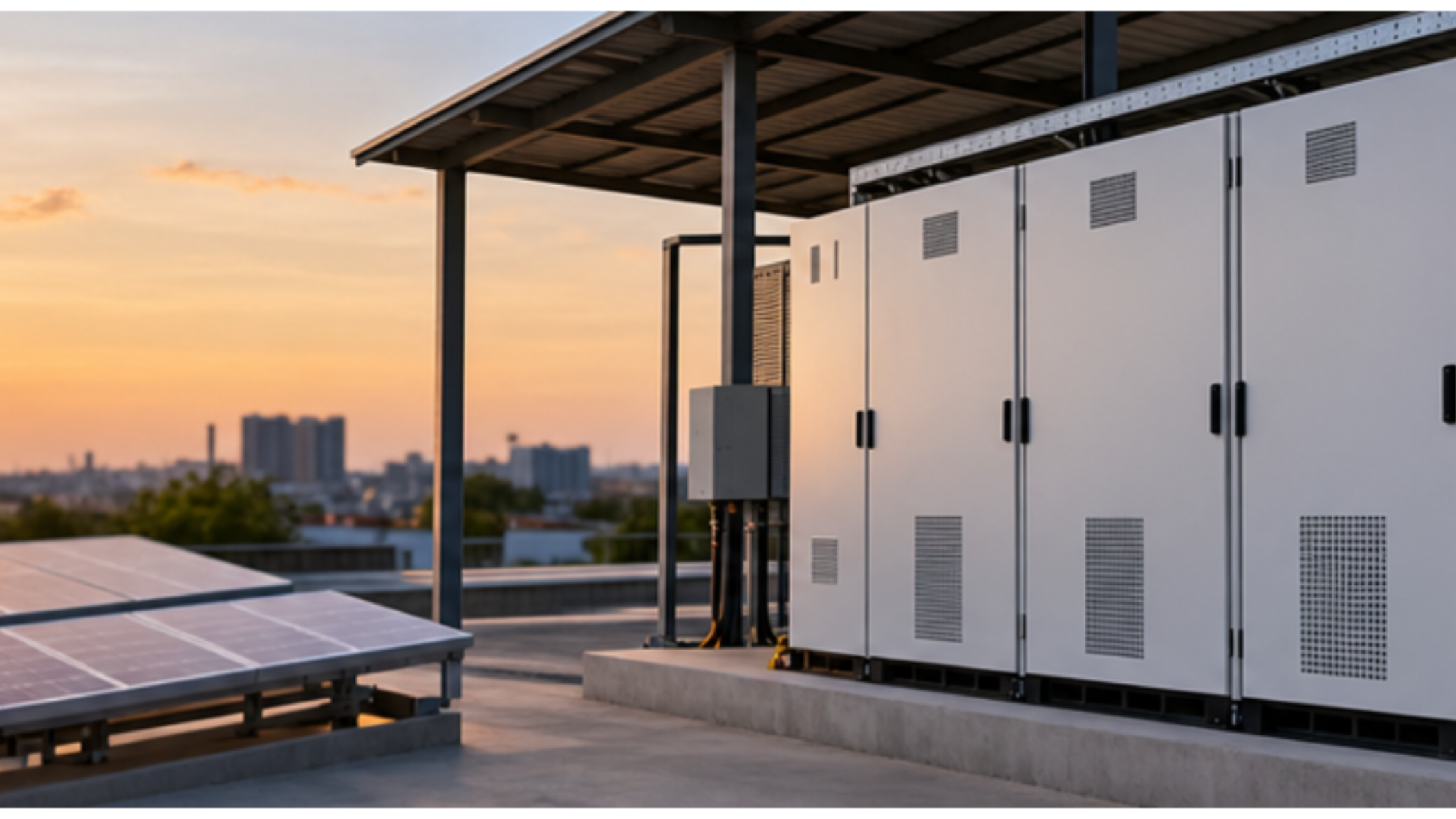
A Battery Energy Storage System is increasingly relevant to organisations that need more control over when and how electricity is used. Unlike a simple backup battery, a properly engineered BESS combines battery modules, power-conversion equipment, controls, monitoring, protection, and energy-management logic.
For commercial and industrial customers in Nagpur and across Maharashtra, the business case should begin with the operational problem the storage system is expected to solve.
What Can a BESS Do?
Depending on system architecture and local operating conditions, battery energy storage can support several objectives.
Potential applications include:
- Backup for selected critical loads
- Greater utilisation of on-site solar generation
- Energy shifting between different periods
- Managing short-duration demand peaks
- Supporting continuity during certain grid interruptions
- Improving energy visibility through monitoring and controls
Not every installation needs all these functions. The best design usually prioritises one or two measurable objectives.
Solar Plus Storage
Solar generation is variable because it depends on available sunlight. A business may also have an electricity-demand pattern that does not exactly match solar production.
Storage can help shift some solar energy to another period.
For example, an establishment with strong afternoon solar generation but important evening loads may be able to store part of the available energy for later use, subject to the selected system configuration.
The financial value depends on tariffs, load profile, battery efficiency, cycling strategy, system cost, and operating life.
Start With Interval Load Data
Monthly electricity bills alone are often insufficient for designing a commercial BESS.
Engineers may need to understand when demand occurs throughout the day. Interval data can reveal peak loads, base loads, operating schedules, solar-generation overlap, and opportunities for storage.
This prevents a common problem: installing a large battery without a clearly defined operating strategy.
Safety Must Be Designed Into the Project
Energy storage concentrates significant electrical energy in a relatively compact system.
A commercial BESS therefore requires careful consideration of electrical protection, battery management, thermal conditions, isolation, emergency procedures, enclosure or room requirements, applicable fire-safety provisions, and manufacturer specifications.
Site access and environmental conditions also matter.
Battery equipment should not be treated as ordinary electrical furniture that can be placed in any convenient corner.
Evaluate the Economics Correctly
A storage proposal should explain how savings or operational benefits are calculated.
Important variables can include:
- Battery usable capacity
- Round-trip efficiency
- Expected cycles
- Degradation assumptions
- Electricity tariff
- Demand profile
- Solar-generation profile
- Maintenance requirements
- Replacement assumptions
- Warranty
- Expected operational life
For backup-focused projects, avoided downtime may also have substantial value even when it does not appear directly as electricity-bill savings.
Which Businesses Can Benefit?
Potential users include factories, warehouses, hospitals, offices, educational institutions, hotels, data-dependent facilities, commercial buildings, and other sites where energy continuity or load management has measurable value.
However, storage is not automatically economical for every property.
A technical and financial assessment should establish whether the project solves a real operational requirement.
Integrate BESS With the Broader Energy Plan
Maxvolt Solar Pvt Ltd serves residential, commercial, industrial, and institutional solar customers from Nagpur. Businesses considering storage should ideally evaluate solar generation, existing electrical infrastructure, load profile, backup requirements, and future expansion together rather than as separate purchases.
A well-designed Battery Energy Storage System should have a clearly stated purpose, measurable operating strategy, appropriate safety architecture, and realistic financial assumptions.
For businesses moving toward more active energy management, that disciplined approach is more valuable than simply purchasing the largest battery capacity the budget allows.
Keywords