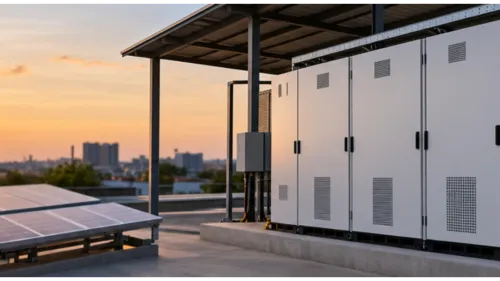
A 3 kW Solar System Nagpur is frequently considered by residential customers because it can suit many medium-consumption homes and falls at an important point in the PM Surya Ghar subsidy structure. But 3 kW should not be treated as a standard package that fits every household.
The correct system size depends primarily on electricity consumption, usable rooftop area, solar access, and how the household uses electricity.
Start With Your Electricity Bills
Collect at least six to twelve months of bills if possible.
Look at monthly units consumed rather than focusing only on the rupee amount. Electricity tariffs, fixed charges, taxes, and billing adjustments can make the final bill an imperfect indicator of actual energy demand.
A home using air conditioning heavily during Nagpur's summer may show significant seasonal variation. A yearly view gives the installer a better basis for sizing.
How Much Electricity Can 3 kW Produce?
Actual solar generation varies with location, season, module technology, orientation, tilt, temperature, shadows, dust, inverter efficiency, and other system losses.
For this reason, an installer should provide a generation estimate based on project conditions rather than promising one fixed daily number throughout the year.
The important comparison is expected annual generation against annual household consumption.
Check the Rooftop
A 3 kW system requires adequate usable area, but total terrace size and usable solar area are not the same.
Exclude or carefully evaluate areas affected by:
- Water tanks
- Staircase structures
- Parapet shadows
- Adjacent buildings
- Trees
- Antennas
- Plumbing
- Regular terrace movement
- Future construction
High-efficiency modules may help where available area is constrained, but the layout must still preserve safe access and suitable spacing.
Why 3 kW Is Relevant Under PM Surya Ghar
For eligible residential consumers, the standard central subsidy reaches ₹78,000 at 3 kW. There is no additional standard central CFA for residential capacity beyond 3 kW under the scheme's normal category.
That makes 3 kW financially interesting, but subsidy should not override sound system sizing.
A household with much higher electricity demand may benefit from a larger plant even though the central subsidy is capped. Conversely, a low-consumption household should assess whether 3 kW is necessary.
Compare System Quality, Not Only Package Price
When evaluating quotations, compare what each 3 kW package actually contains.
Check the:
- Solar module make and technology
- Inverter specifications
- Mounting structure
- DC and AC cables
- Earthing system
- Surge and electrical protection
- Monitoring capability
- Installation workmanship
- Product warranties
- Performance warranty
- Service responsibility
Maxvolt Solar Pvt Ltd offers residential solar EPC services in Nagpur and supplies Reliance HJT solar modules. The company's listed scope includes system design, installation, maintenance, and associated solar support.
Think About Future Consumption
Today's electricity usage may not represent what the house will need five years from now.
Consider whether you expect to add more air conditioners, an electric vehicle, heat pumps, additional floors, home-office equipment, or other significant electrical loads.
Future demand should be discussed during design, although simply oversizing the system without considering regulations, economics, and available space is not the answer.
When Is 3 kW Worth Considering?
A 3 kW system deserves closer evaluation when the household has moderate electricity consumption, sufficient rooftop space, a suitable grid connection, and good daytime solar exposure.
The final decision should follow a site survey and consumption assessment.
For homeowners comparing a 3 kW Solar System in Nagpur, the most useful question is not What is the cheapest 3 kW package? It is What system design gives my property the right balance of generation, quality, subsidy eligibility, safety, and long-term value?
Keywords