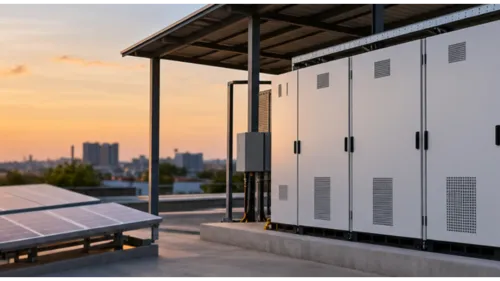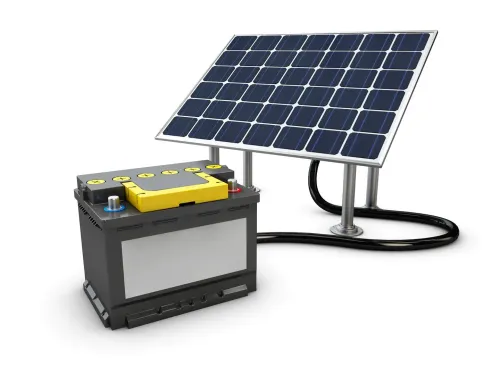
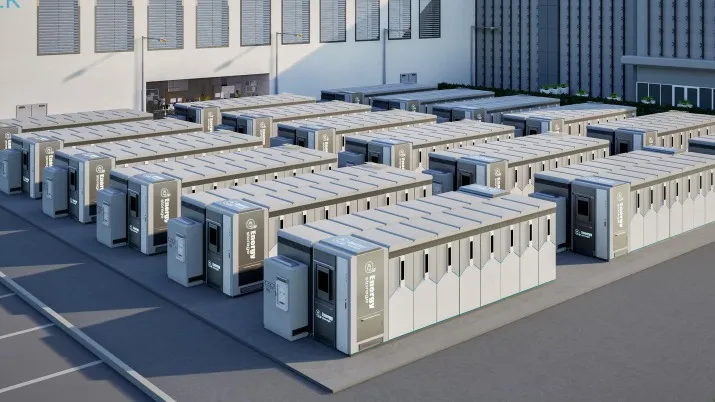
Businesses are increasingly looking beyond solar generation alone and considering how electricity can be stored and managed. A Battery Energy Storage System can support different energy strategies, but the value of storage depends heavily on why it is being installed.
For commercial and industrial properties in Nagpur, storage should therefore begin with an energy assessment rather than a battery catalogue.
Define the purpose first
A battery system can potentially serve several functions depending on its configuration.
A business might investigate storage for:
- Backup of essential equipment
- Greater utilisation of solar generation
- Energy management
- Operational resilience
- Management of selected loads
- Support for a broader hybrid-energy strategy
These objectives require different battery capacities and control strategies.
A business requiring backup for computers and communication equipment has a very different requirement from an industrial unit seeking to support larger electrical loads.
Understand power and energy separately
Battery specifications can be confusing because power and stored energy are related but different.
Power indicates how much electrical load the system can support at a particular time. Energy capacity indicates how much electricity can be stored and therefore influences how long selected loads can operate.
A system can have adequate stored energy but still be unsuitable if its power output cannot support the required load.
This is why businesses should provide accurate load information during the design stage.
Identify critical loads
Trying to back up every electrical load can make storage unnecessarily large and expensive.
Instead, businesses should identify what genuinely needs continuity. This could include servers, security systems, lighting, communications, selected machinery, refrigeration, control equipment, or other critical functions.
Once essential loads are identified, the designer can evaluate their combined demand and expected operating duration.
Consider integration with rooftop solar
Businesses with rooftop solar may consider whether battery storage can complement daytime generation.
The answer depends on the site's consumption profile. A facility that uses most of its solar electricity immediately during working hours may have a different storage case from a property with surplus generation at certain times.
Historical electricity data can help reveal these patterns.
Evaluate the installation environment
Battery systems require appropriate installation planning. Factors such as available space, ventilation or thermal-management requirements, electrical protection, manufacturer specifications, accessibility, and safety provisions need to be considered.
Industrial properties should also assess how storage equipment will fit within their existing electrical infrastructure.
Compare lifecycle value rather than initial price
A quotation should be reviewed beyond the battery's purchase cost.
Consider usable capacity, battery chemistry, cycle characteristics, warranty conditions, compatible inverter or power-conversion equipment, monitoring, expansion possibilities, service arrangements, and expected operating environment.
Maxvolt Solar Pvt Ltd supports businesses in Nagpur that are evaluating solar and energy-storage configurations according to site requirements. A detailed assessment can help determine whether storage addresses a genuine operational need and what system architecture may be appropriate.
Battery storage can be valuable, but it is not automatically necessary for every solar installation.
Businesses should first establish what problem the battery needs to solve, how much load must be supported, for how long, and how storage will interact with solar and grid electricity.
For commercial and industrial customers across Nagpur and Maharashtra, this requirement-led approach provides a more reliable basis for evaluating energy storage than choosing a battery simply according to its advertised capacity.
Keywords